What Is Form 1099-NEC? 2026 Instructions and Filing Guide
The reporting threshold for nonemployee compensation rose to $2,000 for payments made in 2026. Here is who must file Form 1099-NEC, what belongs in Box 1a and when it is due.

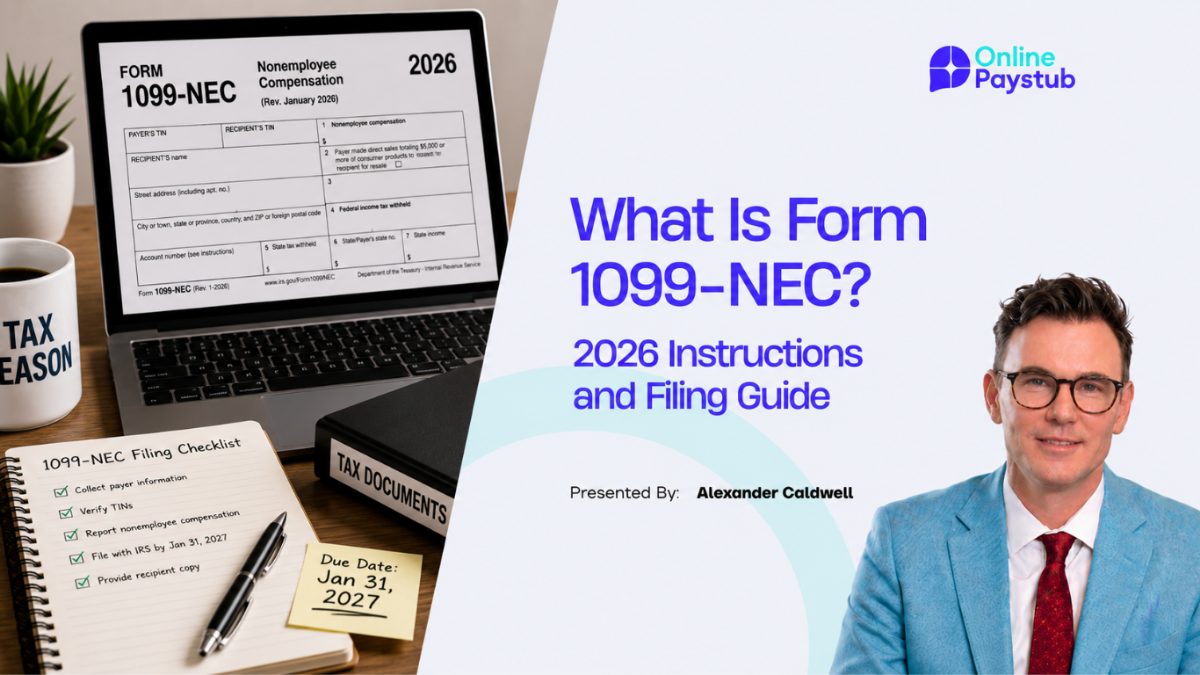
Form 1099-NEC is the federal information return businesses generally use to report nonemployee compensation. For payments made in 2026, the IRS reporting threshold for covered nonemployee service payments increased to $2,000. That is an important change from the $600 threshold that applied to payments made before 2026.
The form is most commonly associated with independent contractors, freelancers and other service providers who are not treated as employees. It helps the payer report qualifying business payments to the IRS and provides the recipient with information used when preparing a tax return.
Who Needs Form 1099-NEC in 2026?
A business generally files Form 1099-NEC when it pays at least $2,000 during 2026 for services performed by someone who is not its employee. The threshold applies to covered payments made in the course of a trade or business. Personal payments are generally outside these reporting rules.
The IRS instructions also cover payments to attorneys and certain other reportable transactions. Backup withholding creates a separate rule: if federal income tax was withheld under the backup withholding rules, a Form 1099-NEC may be required regardless of the payment amount.
The 2026 Reporting Threshold Changed
The $2,000 threshold is one of the most important 2026 changes. For payments made before 2026, the familiar threshold was $600. For payments made in 2026, the statutory threshold increased to $2,000 for certain information-reporting requirements, including qualifying nonemployee compensation.
For years after 2026, the threshold may be adjusted for inflation. Businesses should therefore check the instructions for the tax year they are actually reporting rather than assuming the 2026 amount will remain unchanged.
What Goes in the Nonemployee Compensation Box?
For the 2026 revision, the IRS instructions identify Box 1a for nonemployee compensation of $2,000 or more. Reportable amounts can include fees, commissions, prizes and awards for services and other compensation for services performed for the payer's trade or business by a person who is not an employee.
Businesses should use actual payment records and the contractor's correct taxpayer information. Form W-9 is commonly used to collect the payee's taxpayer identification information before reporting season.
1099-NEC Filing Deadline
Form 1099-NEC generally has a January 31 deadline for both filing with the IRS and furnishing the statement to the recipient. The deadline applies whether the IRS copy is filed on paper or electronically, subject to the usual next-business-day rule when a deadline falls on a weekend or applicable legal holiday.
This earlier deadline is one reason businesses should reconcile contractor payments before January rather than waiting until tax season is already underway.
Paper Filing and Electronic Filing
Businesses can file qualifying information returns electronically through IRS systems such as IRIS. Current federal rules generally require electronic filing when a filer reaches the applicable aggregate e-file threshold across covered information returns.
When Form 1099-NEC is filed on paper, Form 1096 is generally used as the transmittal. Businesses should follow the current IRS filing instructions because electronic filing requirements and technical procedures can change.
1099-NEC Is Not a W-2
Form 1099-NEC reports nonemployee compensation. Form W-2 reports wages and certain tax information for employees. Choosing between them is not simply a matter of which form is easier to prepare.
Worker classification depends on the actual working relationship and applicable law. A business should not treat an employee as an independent contractor merely to avoid payroll responsibilities.
What the Contractor Does With a 1099-NEC
Receiving Form 1099-NEC does not by itself calculate the recipient's final tax bill. Independent contractors generally use their business records and applicable tax forms to report income and expenses. Self-employment tax and estimated tax rules may also be relevant depending on the person's circumstances.
A contractor should keep the form with tax records and compare it with personal invoices and payment records. If the form contains an error, the payer should be contacted so the information can be reviewed and corrected when necessary.
Good Recordkeeping Makes 1099 Filing Easier
The simplest way to prepare for 1099 season is to maintain accurate records throughout the year. Keep contractor names, taxpayer information, payment dates and payment totals organized instead of reconstructing them in January.
Also remember that not every payment method is reported on Form 1099-NEC. Certain payment-card and third-party network transactions fall under Form 1099-K reporting rules for the payment settlement entity. Review the current IRS instructions when payment methods create uncertainty.
Read My Full Online PayStub Guide
I cover the form, filing process and practical details in greater depth here: What Is Form 1099-NEC? 2026 Instructions and Filing Guide