How Much Is the Child Tax Credit? 2025-2026 Guide
The Child Tax Credit is worth up to $2,200 per qualifying child for both 2025 and 2026. Here are the eligibility tests, the income phase-outs and how the refundable portion actually works.

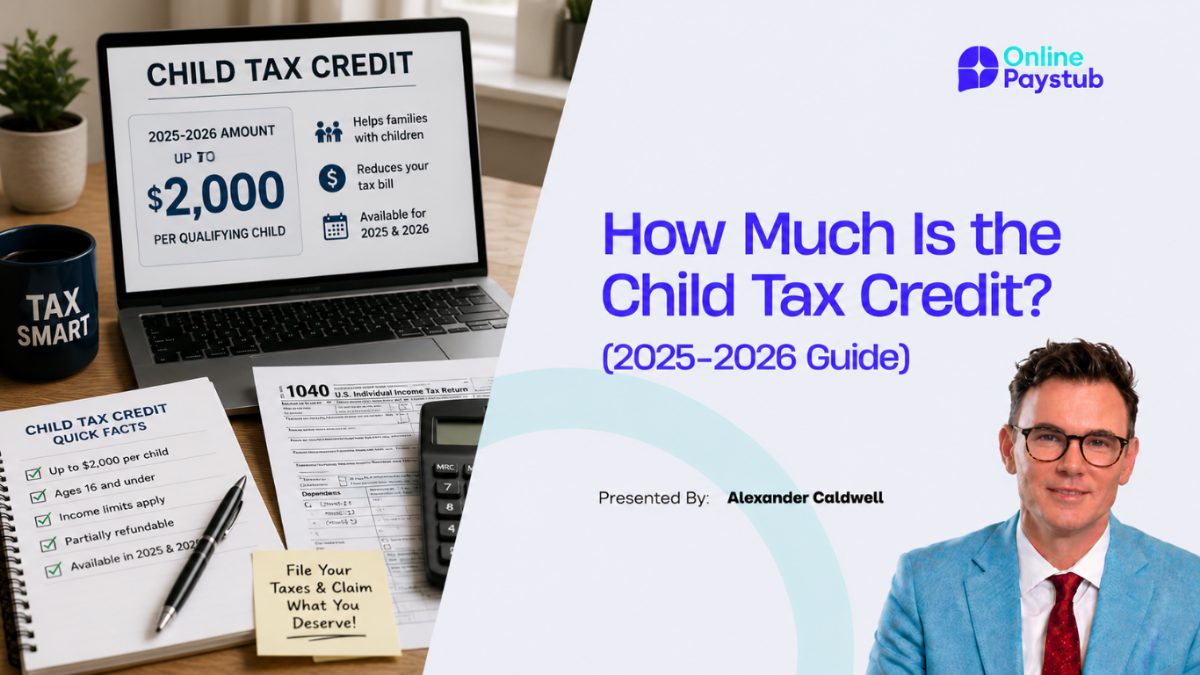
The federal Child Tax Credit is worth up to $2,200 for each qualifying child for tax year 2025. The same $2,200 maximum applies for 2026. The credit can reduce federal income tax, while qualifying taxpayers may also receive a refundable portion through the Additional Child Tax Credit.
For 2025, the refundable Additional Child Tax Credit is limited to $1,700 per qualifying child. Eligibility depends on more than simply having a child. Age, relationship, residency, dependency, Social Security number requirements and income can all affect the credit.
How Much Is the Child Tax Credit for 2025 and 2026?
For both 2025 and 2026, the maximum Child Tax Credit is $2,200 per qualifying child. The 2025 increase was made permanent under federal legislation, with inflation adjustments applying after 2025. The IRS has confirmed that the 2026 maximum remains $2,200.
The credit is calculated per qualifying child, so a taxpayer with two qualifying children may potentially have a larger total credit than a taxpayer with one. The actual amount still depends on eligibility and income.
Who Is a Qualifying Child?
A qualifying child generally must be under age 17 at the end of the tax year, have the required relationship to the taxpayer, live with the taxpayer for more than half the year and be properly claimed as a dependent. Additional support, citizenship or residency and joint-return rules also apply.
Social Security number requirements are particularly important. For tax year 2025, the IRS requires a valid SSN for the qualifying child. New rules also apply to the taxpayer identification numbers required from the filer or filers claiming the credit.
Income Phase-Outs
The full Child Tax Credit is generally available when modified adjusted gross income does not exceed $200,000 for most filing statuses or $400,000 for married couples filing jointly. Above those levels, the credit is reduced as income increases.
Because the phase-out calculation depends on income and filing status, taxpayers near these limits should calculate the credit using the applicable year's Schedule 8812 instructions rather than assuming they qualify for the full amount.
What Is the Additional Child Tax Credit?
The Additional Child Tax Credit is the potentially refundable portion of the Child Tax Credit. For 2025, up to $1,700 per qualifying child may be refundable, subject to the earned-income formula and other eligibility rules.
The IRS states that at least $2,500 of earned income is generally required for the ACTC. Refundability does not mean every eligible family automatically receives $1,700 in cash for each child. The calculation depends on earned income and the unused portion of the Child Tax Credit.
When Can a Child Tax Credit Refund Arrive?
Returns claiming the refundable Additional Child Tax Credit can be subject to the PATH Act refund hold. For returns properly claiming ACTC for tax year 2025, the IRS cannot issue the related refund before mid-February 2026.
That restriction applies to the entire refund, not only the ACTC portion. Processing time can also vary when a return requires correction or additional review.
What If Your Child Is 17 or Older?
A dependent who is 17 or older at the end of the tax year generally does not qualify as a qualifying child for the Child Tax Credit. However, the dependent may potentially qualify for the Credit for Other Dependents if the applicable requirements are met.
This is a separate credit with different rules, so families should not assume that losing Child Tax Credit eligibility means no dependent-related credit is available.
Keep Tax and Income Records Together
Child Tax Credit calculations can depend on earned income, filing status and dependent information. Keeping W-2 forms, 1099 forms and other legitimate income records organized makes it easier to prepare an accurate return.
If family circumstances changed during the year, such as custody arrangements or a child's living situation, review the dependency and residency tests carefully before claiming the credit.
Read My Full Online PayStub Guide
I cover the eligibility rules and tax details in greater depth here: How Much Is the Child Tax Credit? 2025-2026 Guide