California's "Exit Tax" Explained: What Actually Happens When You Move
California charges no general tax for leaving the state. What continues is taxation of California-source income, and residency is what determines the rest.

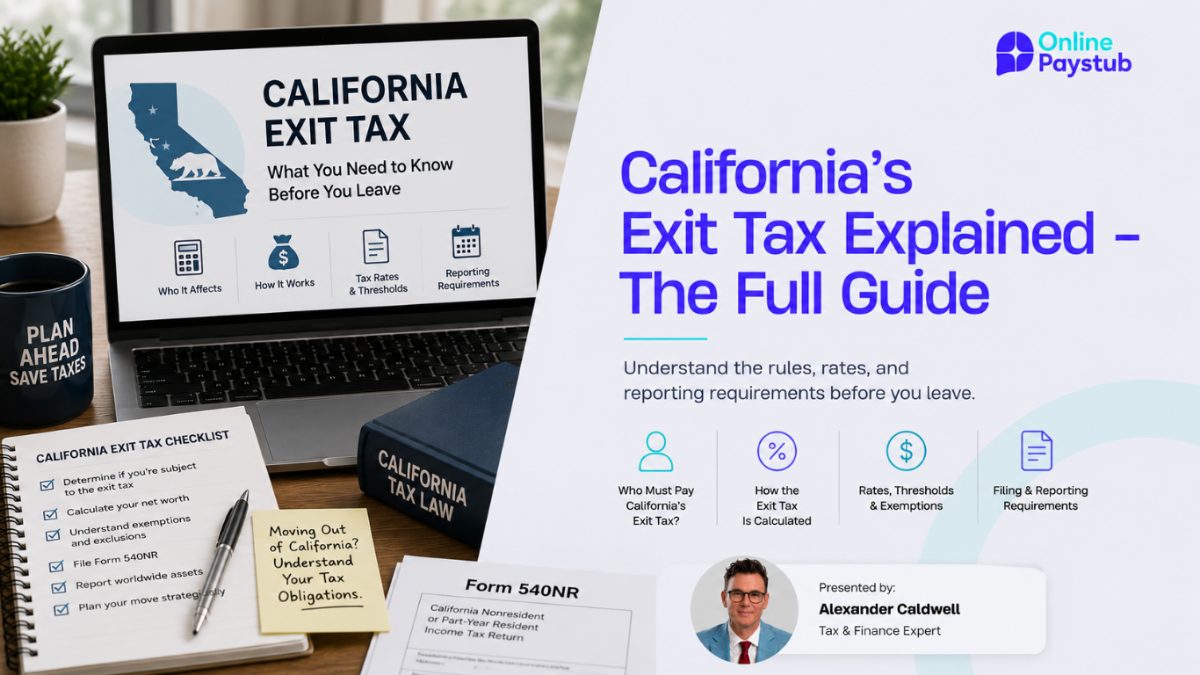
California does not impose a general tax simply because an individual moves out of the state. The phrase “California exit tax” is therefore misleading when it suggests that residents receive a special bill merely for changing their residence.
What can happen is that California continues to tax certain income connected to the state after a person becomes a nonresident. A part-year resident may also owe California tax on worldwide income received while still a resident and on California-source income received after becoming a nonresident.
Is There a California Exit Tax?
There is no broad individual “exit tax” charged solely for leaving California. The real tax questions involve residency, the date residency changed and whether income received after the move remains California-source income.
California's Franchise Tax Board publishes specific guidance for people who change residency. Those rules are more useful than treating every post-move tax issue as an exit tax.
How California Taxes Part-Year Residents
A part-year resident is generally taxed on worldwide income received while a California resident. After becoming a nonresident, California generally taxes income from California sources.
This makes the residency-change date important. Income received before and after that date can be treated differently depending on its source and the specific tax rules involved.
What Income Can California Tax After You Move?
California-source income can remain taxable after a move. Examples identified by the Franchise Tax Board include income from services performed in California, rent from California real property, gains from California real property and income from a California business, trade or profession.
Other categories can be more complicated. Deferred compensation, stock options, installment sales, pass-through income and carryovers may require specific sourcing or allocation rules.
Moving Does Not Automatically End Every California Filing Obligation
A former resident may still need to file a California return if California-source income or other filing requirements apply. Part-year residents and nonresidents generally use Form 540NR when a California return is required.
The filing requirement depends on the person's facts. Simply having a former California address does not by itself determine the answer.
Residency Is More Than Your Mailing Address
California residency depends on facts and circumstances. The Franchise Tax Board looks at whether a person is in California for other than a temporary or transitory purpose or remains domiciled in California while away for a temporary or transitory purpose.
Changing a driver's license or mailing address can be relevant evidence, but no single administrative step automatically resolves every residency question. People making a substantial move should keep records that reflect where they actually live and conduct their affairs.
Remote Work After Leaving California
Moving to another state while continuing to work for a California employer does not automatically make every wage dollar California-source income. California looks at where services are performed and other sourcing rules.
If a former resident travels back to California and performs services in the state, some wages may be California-source. Remote-work arrangements can therefore require a closer look at work locations and payroll records.
Why the "Exit Tax" Label Creates Confusion
The label combines several different issues into one phrase: part-year residency, California-source income, deferred compensation, business interests and gains connected with California property.
Someone who permanently moves and has no continuing California-source income may have a very different tax situation from someone who moves but keeps California rental property, regularly works in California or owns a California business.
What to Review Before and After a Move
Keep records showing the date and circumstances of the move, where services were performed and which income remained connected to California. Review year-end W-2 and 1099 forms for California amounts and compare them with your actual work and residency history.
For complex compensation, business ownership or large transactions, California residency and sourcing rules can become technical. Professional tax advice can be worthwhile when significant amounts are involved.
The Bottom Line
California's rules can create tax obligations after someone leaves, but that is not the same as a universal tax for moving away. Focus on residency and income sourcing rather than the popular “exit tax” label.
The Franchise Tax Board's residency publications are the best starting point for determining whether a former resident still has California taxable income or a California filing requirement.