How Much Tax Is Taken Out of a Minor's Paycheck?
Age does not create a special payroll tax rate. Here is what actually comes out of a teenager's paycheck, why federal income tax can be zero and which family exceptions exist.

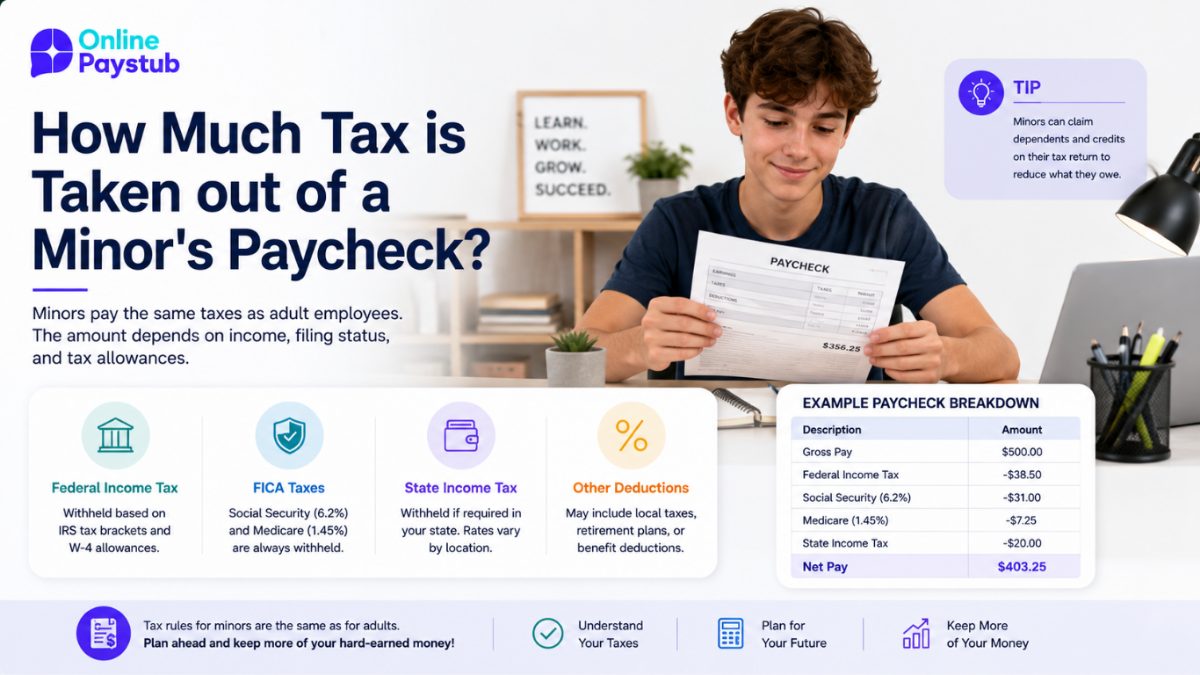
A minor's paycheck can have several different taxes taken out, but age alone does not create a special federal payroll tax rate. For most minor employees, federal income tax withholding depends on earnings and Form W-4 information, while Social Security and Medicare taxes generally apply to employee wages regardless of age unless a specific exception applies.
This means two teenagers earning different amounts can see very different deductions. One may have no federal income tax withheld from a small paycheck while still seeing Social Security and Medicare taxes. State and local withholding can add another layer depending on where the minor works.
Do Minors Pay Federal Income Tax on Paychecks?
Minors can be subject to federal income tax just like other taxpayers. The amount withheld from an employee's paycheck is generally based on taxable wages, payroll frequency and the information supplied on Form W-4.
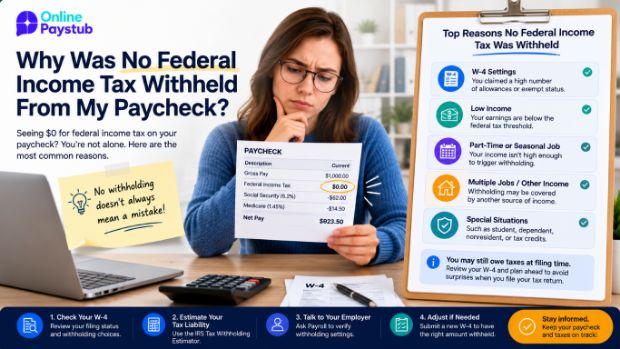
A small paycheck can produce zero federal income tax withholding under the IRS withholding tables. That does not mean minors are automatically exempt from federal income tax.
Can a Minor Claim Exempt on Form W-4?
A minor may claim exemption from federal income tax withholding only if the IRS requirements for exempt status are met. For 2026, the employee generally must have had no federal income tax liability in 2025 and expect to have no federal income tax liability in 2026.
Being under 18 is not one of the tests. A student or teenager should not check the exemption box simply because of age.
Social Security and Medicare Taxes
Social Security and Medicare taxes are different from federal income tax withholding. IRS guidance states that employee wages are generally subject to these taxes regardless of the employee's age.
For most covered employment, the employee share is withheld from wages and the employer also pays an employer share. Specific employment exceptions exist, so the type of work and employer can matter.
Special Rules for Children Working for Parents
Family employment can have special payroll tax rules. A child under age 18 who works in a trade or business operated by a parent as a sole proprietorship, or by a partnership in which each partner is a parent of the child, can be exempt from Social Security and Medicare taxes on those wages.
Federal unemployment tax has a separate age rule for certain family employment. These exceptions are narrow and depend on the business structure and relationship, so they should not be applied to ordinary jobs held by minors.
What About State Income Tax?
State withholding depends on the state where the minor works and applicable state rules. Some states do not impose an individual income tax, while others have their own withholding forms, thresholds and filing requirements.
A paycheck can therefore show no federal income tax but still contain state or local withholding, or the reverse.
Example of a Minor's Paycheck
Suppose a teenager works part time and earns a relatively small amount during a weekly pay period. The federal withholding calculation may result in $0 of federal income tax for that paycheck based on the employee's Form W-4 and the current IRS tables.
Social Security and Medicare taxes may still appear if the employment is covered. The exact net pay cannot be determined from age alone because hours, rate of pay, W-4 entries, state rules and other deductions all matter.
Does Zero Withholding Mean No Tax Return Is Needed?
No. Payroll withholding and the requirement to file a federal income tax return are related but separate questions. Filing requirements depend on annual income, the type of income and other circumstances.
A dependent minor can also have investment or self-employment income, which can change the tax picture. Year-end tax documents should be reviewed rather than relying only on one paycheck.
What Should a Minor Check on a Pay Stub?
Start with hours worked, hourly rate and gross pay. Then review federal income tax, Social Security, Medicare and any state or local taxes shown. Compare the deductions with the resulting net pay.
If something looks wrong, the employee or parent should ask the employer's payroll department for an explanation. The pay stub is useful because it shows how the payment was calculated instead of only showing the final deposit.