6 Effective Team Motivation Ideas for Turbulent Times
Motivation during unstable periods comes from reduced uncertainty rather than speeches. Six practical management habits that hold a team together when conditions keep changing.

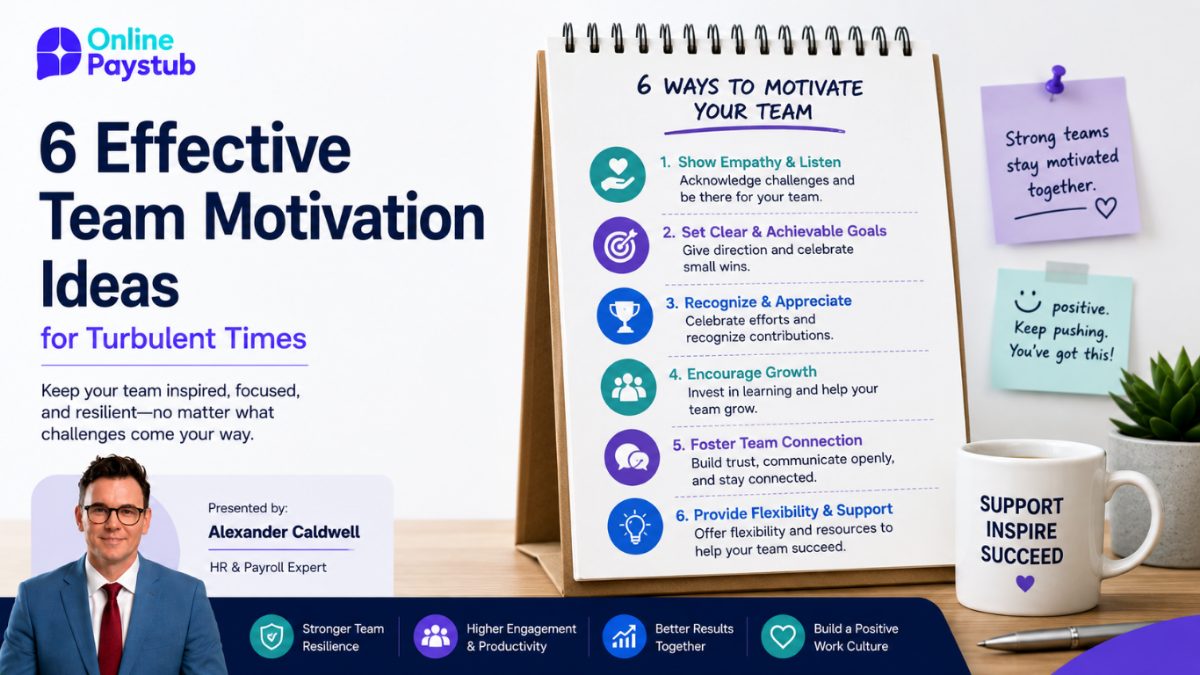
Keeping a team motivated during turbulent periods is less about motivational speeches and more about reducing uncertainty. Employees work better when priorities are clear, managers communicate honestly and people understand what they can control.
Periods of rapid change, financial pressure, restructuring or heavy workloads can make normal management habits less effective. The goal should be to create stability where possible without pretending that every problem has already been solved.
1. Make Priorities Unusually Clear
When conditions change quickly, teams can waste energy trying to guess what matters most. Managers should identify the few outcomes that deserve attention now and explain what can temporarily move lower on the list.
Clear priorities also make it easier for employees to make day-to-day decisions without waiting for approval on every small issue.
2. Communicate What You Know and What You Do Not
Silence creates room for rumors. Regular updates are useful even when there is no major announcement, especially when employees are waiting for decisions that affect their work.
Good communication does not require pretending to know the future. Saying what is confirmed, what remains uncertain and when the next update is expected is often more credible.
3. Give Employees More Control Over Their Work
Uncertainty outside an employee's control can make autonomy inside the job more valuable. Where possible, let people decide how to organize tasks, solve problems or sequence their work.
Autonomy should come with clear expectations. Employees need enough freedom to work effectively without being left unsure about responsibilities or deadlines.
4. Recognize Useful Work Specifically
Recognition is more meaningful when it identifies what someone actually did. Instead of a generic “great job,” explain which action helped the team, customer or project.
This is especially important during difficult periods when much of the work involves solving problems that may not produce visible wins.
5. Protect the Team From Unnecessary Work
Motivation drops when employees are asked to treat every task as urgent. Managers can help by removing low-value meetings, duplicate reporting and projects that no longer support current priorities.
Reducing unnecessary work is not the same as lowering standards. It gives the team more capacity for the work that actually matters.
6. Turn Large Problems Into Shorter Goals
Long-term targets can feel abstract when circumstances are unstable. Breaking work into shorter milestones gives teams a clearer sense of progress.
A useful short-term goal should have an owner, a realistic deadline and a result that the team can recognize. Small completed milestones can restore momentum without relying on artificial incentives.
Pay Attention to Workload, Not Just Morale
A motivation problem can sometimes be a workload problem. If deadlines, staffing and responsibilities are unrealistic, another team-building activity will not fix the underlying issue.
Managers should look for repeated overtime, missed handoffs, growing backlogs and unclear ownership. These signals can reveal structural problems before they become broader engagement issues.
Consistency Matters More Than One Big Initiative
Teams usually respond better to predictable management habits than occasional bursts of enthusiasm. Clear weekly priorities, regular updates and specific recognition can have more lasting value than a one-time motivational event.
In turbulent periods, employees do not need managers to manufacture certainty. They need enough clarity and support to keep doing good work while conditions change.