Employee Goal Setting Worksheet: How to Accomplish Your Goals
A goal-setting worksheet turns a vague ambition into a specific result, a short list of actions and a review schedule. Here is what belongs on the page, with a template you can copy.

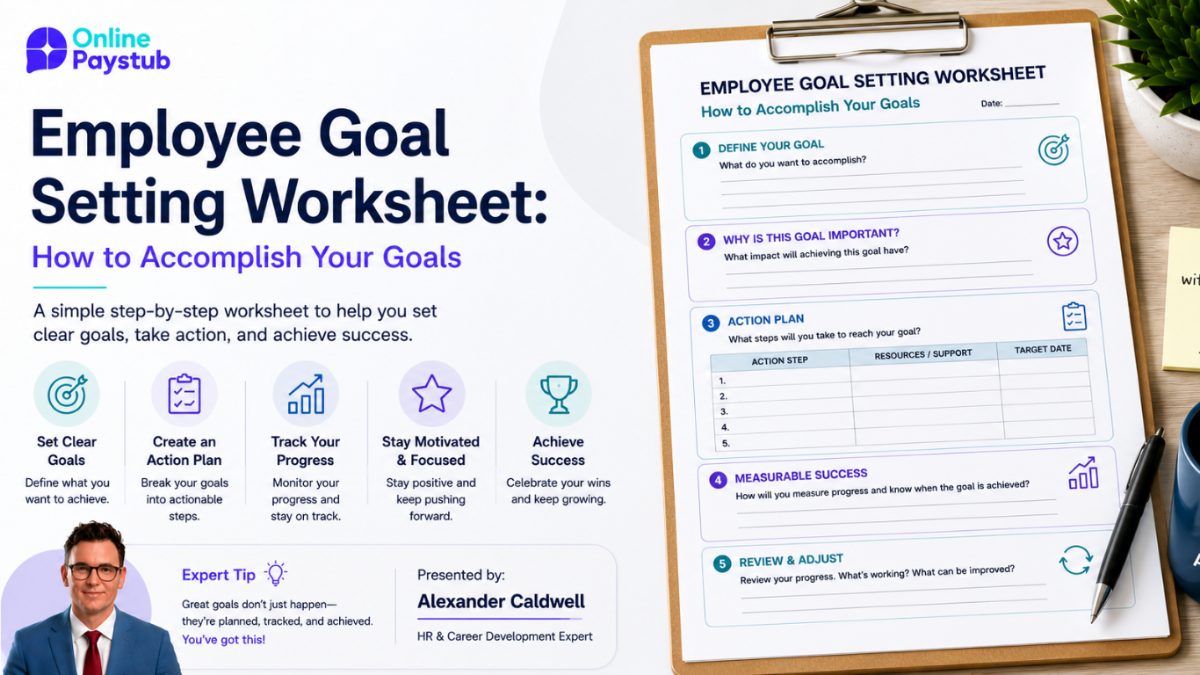
An employee goal-setting worksheet should turn a broad ambition into a specific result, a small number of actions and a realistic review schedule. The worksheet is useful because it forces the employee to define what success actually looks like instead of leaving the goal as a vague intention.
A good goal does not need to be complicated. It needs to be meaningful to the employee's role, measurable enough to review and flexible enough to adjust when circumstances change.
Start With the Result You Want
Write the goal as an outcome rather than a general intention. “Improve client communication” is difficult to measure. “Send a written project update to every active client by Friday each week for the next quarter” is much easier to review.
The wording should make it clear what will be different when the goal has been achieved.
Connect the Goal to the Employee's Work
Goals are more useful when employees understand why they matter. Add one sentence explaining how the goal supports the role, team or business.
This also helps managers distinguish meaningful development goals from extra tasks that do not contribute to the employee's responsibilities.
Define How Success Will Be Measured
Choose one or two indicators that show progress. Depending on the goal, this might be completion rate, response time, sales activity, project milestones, error reduction or another relevant measure.
Not every goal needs a complicated dashboard. The measurement simply needs to answer whether progress is actually happening.
Break the Goal Into Milestones
A large annual goal becomes easier to manage when divided into monthly, quarterly or project-based milestones. Each milestone should represent a meaningful piece of progress.
Milestones also create opportunities to adjust the plan early rather than discovering at the end of the year that the original approach was not working.
Identify the Actions You Control
Employees cannot control every outcome. A salesperson cannot force a prospect to buy and a recruiter cannot force a candidate to accept an offer.
The worksheet should therefore include actions within the employee's control. Examples might include outreach completed, follow-ups sent, training finished or process improvements tested.
List the Resources and Support Needed
Some goals require more than individual effort. Note whether the employee needs training, software, budget, information from another team or regular manager feedback.
Identifying these dependencies at the beginning prevents a goal from becoming an assignment the employee was never equipped to complete.
Set Review Dates
Do not wait until the final deadline to discuss progress. Add short review points to the worksheet so the employee and manager can identify obstacles and adjust the plan.
A monthly check may be appropriate for a quarterly goal, while a longer-term development goal might need a different rhythm.
Use This Simple Goal-Setting Worksheet
| Field | What to write |
|---|---|
| Goal | What specific result do I want to achieve? |
| Why it matters | How does this support my role, team or development? |
| Success measure | What will show that the goal has been achieved? |
| Key actions | Which actions are within my control? |
| Milestones | What should be completed along the way? |
| Resources needed | What support, tools or information will I need? |
| Deadline | When should the final result be achieved? |
| Review dates | When will progress be checked? |
| Obstacles | What could prevent progress and how can I respond? |
| Next action | What is the first concrete step I will take? |
Review the Goal Without Turning It Into a Formality
A worksheet is only useful if it is revisited. During reviews, discuss what changed, which actions worked and whether the original target is still appropriate.
Adjusting a goal is not automatically a failure. Business priorities, resources and responsibilities change. The important part is to make changes deliberately and document the new expectation.
Keep the Worksheet Short Enough to Use
A goal-setting worksheet should help someone think, not create another administrative burden. One page is often enough for a single goal.
If employees need several pages to explain the goal, the objective may be too broad. Splitting it into separate goals can make progress easier to manage.