What Is a Payroll Card and How Does It Work?
A payroll card delivers wages to a prepaid account instead of a bank account. How the programme works, which fees to check and why an employer cannot make it your only option.

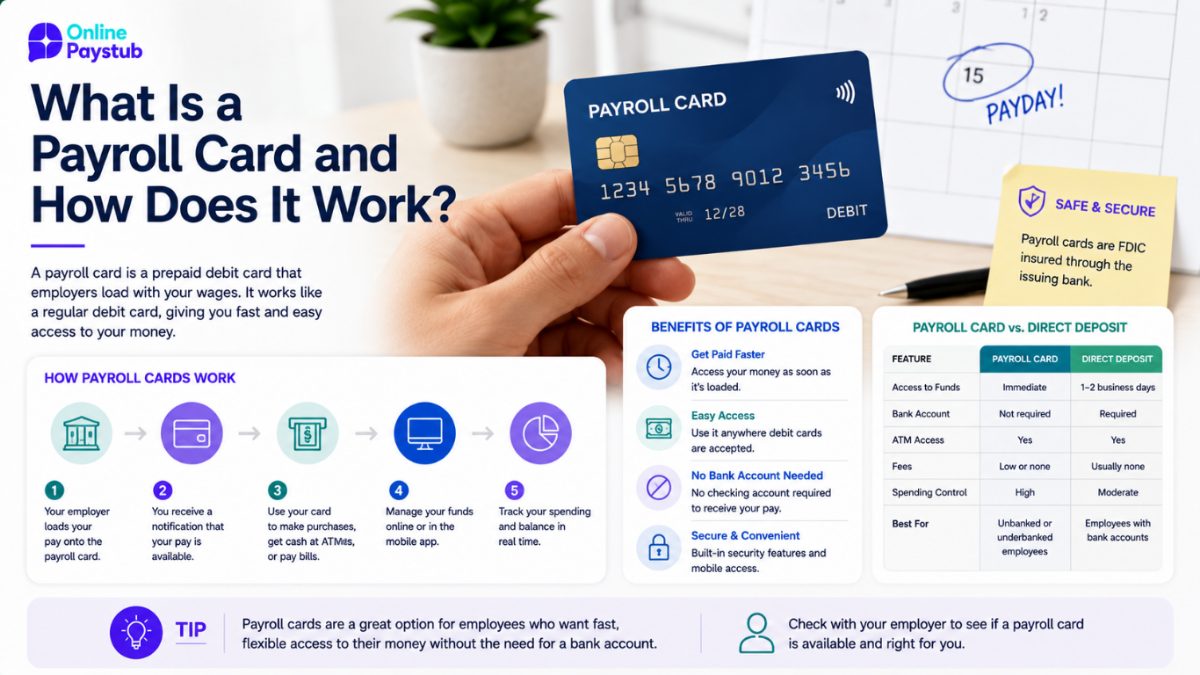
A payroll card is a prepaid card arranged by an employer so an employee can receive wages electronically. Instead of sending pay to the employee's bank account or issuing a paper check, the employer loads wages onto the payroll card account.
The employee can then use the card for purchases or access funds according to the card's terms. Payroll cards can be useful for employees without traditional bank accounts, but fees and access rules deserve attention before choosing this payment method.
How Does a Payroll Card Work?
An employer establishes a payroll card program with a financial institution or card provider. On payday, the employee's wages are transferred to the payroll card account.
The card can generally be used anywhere permitted by the card network and agreement. ATM withdrawals, cash access and transfers may also be available, although fees can vary.
Is a Payroll Card the Same as a Debit Card?
A payroll card can function similarly to a debit card, but the underlying account is different from a traditional checking account. It is a type of prepaid account funded with employee compensation.
The cardholder should read the account disclosures rather than assuming every feature and fee works like a bank debit card.
Can an Employer Require a Payroll Card?
No. Federal consumer protection rules do not allow an employer to require an employee to receive wages only through a payroll card. The employer must provide at least one alternative way to receive wages.
State law can affect which alternatives must be offered and whether additional consent rules apply.
What Fees Can Payroll Cards Have?
Payroll cards can carry fees for certain services. Examples can include out-of-network ATM withdrawals, some balance inquiries, paper statements or other card features depending on the program.
Federal prepaid-card rules require disclosures that help employees review important fees before choosing the card. Employees should compare those terms with direct deposit or other available payment methods.
What Protections Apply to Payroll Cards?
Payroll card accounts receive protections under the Electronic Fund Transfer Act and Regulation E. These include required disclosures and protections related to certain errors and unauthorized transactions.
Cardholders also have rights related to account information. The exact process for reporting a lost card, unauthorized transaction or error should be explained in the cardholder agreement.
Payroll Card vs. Direct Deposit
Both methods can deliver wages electronically. Direct deposit sends the money to an account selected by the employee, while a payroll card sends wages to a prepaid account associated with the employer's payroll card program.
The better option depends on account access, fees and the employee's banking preferences. An employee who already has a checking account may prefer direct deposit, while another employee may find a payroll card convenient.
A Payroll Card Is Not a Pay Stub
A payroll card is a payment method. A pay stub is a wage statement explaining how the employee's pay was calculated. They serve different purposes.
An employee can receive wages through a payroll card and still receive a pay stub or wage statement showing gross pay, taxes, deductions, net pay and other required payroll information.
What to Review Before Choosing a Payroll Card
Read the fee disclosure and cardholder agreement. Check how to withdraw cash, where free ATMs are available, whether transfers are allowed and what happens if the card is lost.
Also compare the payroll card with the employer's alternative payment option. The most convenient method is the one that gives you practical access to your wages without unnecessary fees.
Read My Full Online PayStub Guide
For a broader comparison and more detail, see my Online PayStub guide: What Is a Payroll Card and How Does It Work?